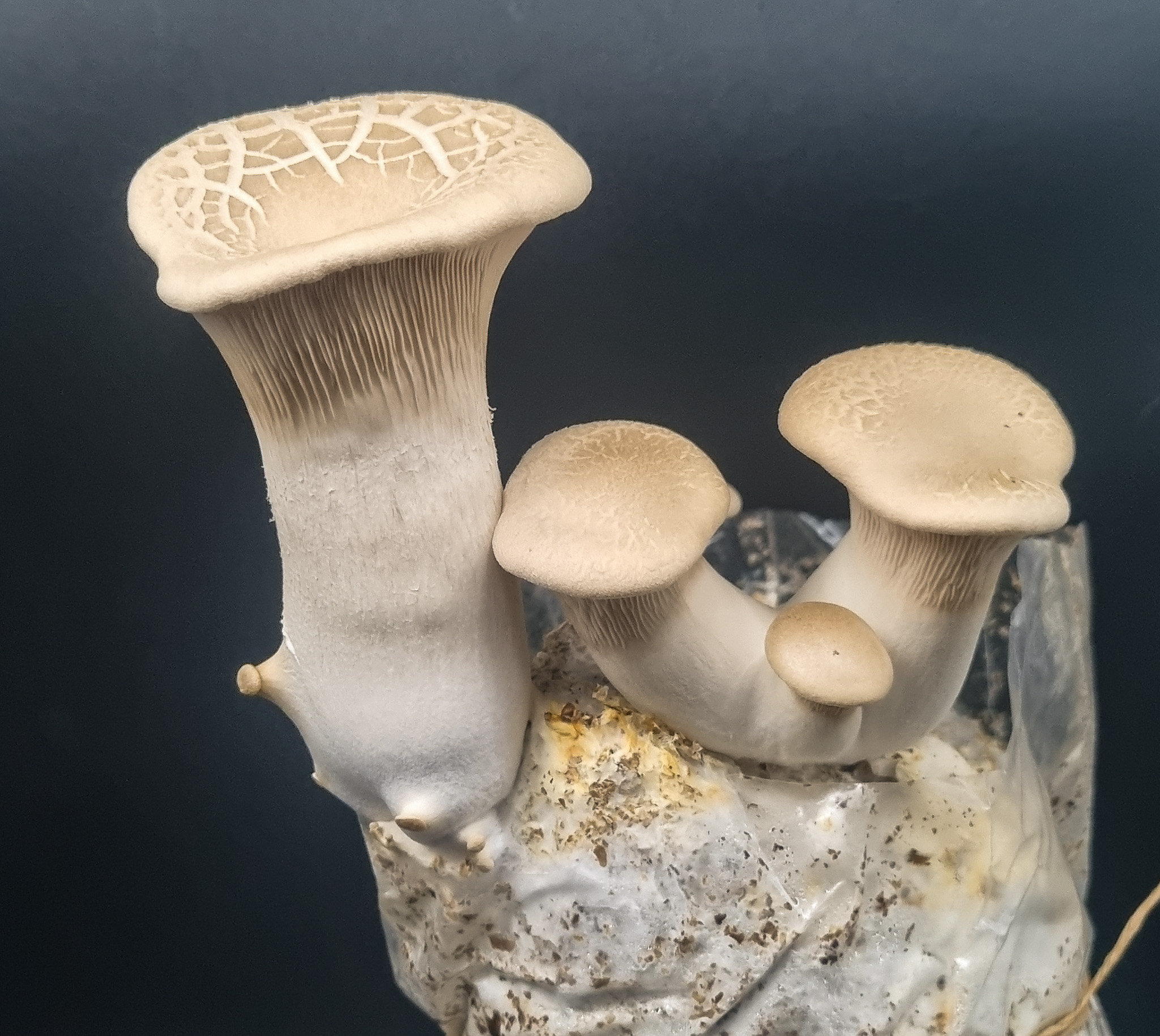
One of the most enjoyable things about fungi is the moment somebody sees a mushroom fruit properly for the first time.
You can explain mycelium, humidity and fruiting conditions as much as you like, but there is still something slightly improbable about watching a solid-looking block produce a cluster of oyster mushrooms or a Lion’s Mane that seems to have appeared from nowhere.
We want more people to experience that, which is why grow kits have always been part of the plan for My Mushrooms.
We could simply put boxes online and send them through the post. We will probably sell kits online in time. But we think the best starting point is more hands-on: invite people into the farm, show them how the process works, help them make a kit and send them home with something they understand.
More than a box with instructions
A grow kit should make mushroom cultivation accessible. It should not require a laboratory, a specialist growing room or years of experience. At the same time, mushrooms are living organisms rather than flat-pack furniture. They respond to the environment in your home, and occasionally they decline to follow the timetable printed on the leaflet.
That is much easier to understand when somebody has shown you what healthy mycelium looks like, why fresh air matters and how to recognise when a kit needs a small adjustment.
Our planned workshops at Lion Works will therefore be practical rather than lecture-heavy. Visitors will be able to see the fruiting room and lab, learn what goes into producing a grow kit, make kits during the session and take one home from the varieties available on the day.
We expect the range to focus initially on oyster mushrooms and Lion’s Mane. We are interested in other varieties too, but—as with the fresh-mushroom side of the business—we want to make sure we can produce each kit consistently before promising it more widely.
Who the workshops are for
You do not need to arrive knowing the difference between mycelium and a mushroom. Curiosity is enough.
The workshops should suit home growers who want an unusual project, fungi enthusiasts who would like to see a small working farm, and gift buyers looking for something more memorable than another object. They should also be useful for chefs who are interested in fruiting mushrooms on site or simply want to understand more about the ingredient they use.
Charlotte brings a huge amount to this side of the business. She has worked across three different mushroom farms, founded the Sheffield Mycological Society and regularly leads educational and foraging walks in local woodland and parks. She has a talent for making fungi interesting without making people feel as though they have accidentally joined a university seminar.
Her other business, CharlArt Entertainment, perhaps explains some of that ability. As a bubbleologist she is used to combining science, spectacle and public engagement. A mushroom workshop will be a little less soapy, but the same sense of curiosity applies.
I bring the perspective of somebody who always wanted to be a farmer, went into IT instead and now spends an unreasonable amount of time monitoring the atmosphere inside an insulated room. Between us, the aim is to make the workshops informed, practical and welcoming.
A workshop inside a creative community
The setting is part of the experience. My Mushrooms is based at Lion Works in Kelham Island, within the Kelham Island Arts Collective. We are surrounded by artists, makers and sculptors, and the farm has been built with a great deal of support from that community.
Visitors will not be arriving at a polished agricultural visitor centre. They will be stepping into a small urban farm that has been created inside an old industrial building using donated materials, second-hand finds, technical problem-solving and a fair amount of stubbornness.
We think that makes the process more interesting, not less.
It also means the workshops can show the reality behind the product: the clean lab work, the controlled fruiting environment and the decisions needed to produce reliable mushrooms in the middle of Sheffield.
What happens next
We are developing the workshop format and the first grow-kit range carefully. Before confirming dates, we need to be satisfied with the varieties, the practical flow of the session and the reliability of the kits people will take home.
When bookings open, we will publish the dates, price, session length, capacity and the varieties available. Until then, people are welcome to register their interest so that we can let them know when the first sessions are ready.
Our longer-term aim is simple: fresh gourmet mushrooms for Sheffield kitchens, and a way for curious people to discover how enjoyable growing fungi can be for themselves.
If you would like to hear about the first workshops or grow-kit releases, please contact My Mushrooms and ask to join the interest list.